Why Long-Term Builders May Benefit More Than Fast Movers
Every major technological shift creates two groups of people.
The first group observes.
The second group adapts and builds.
History has repeated this pattern across industrial revolutions, the rise of the internet, smartphones, cloud computing, and now Artificial Intelligence.
Most opportunities appear obvious only after early adoption has already happened.
Today, AI is becoming another major shift—not because it replaces people entirely, but because it changes how value can be created, distributed, and scaled.
For individuals and businesses willing to learn and adapt, this transition creates opportunities to build sustainable digital systems and long-term projects.
However, many misunderstand what this opportunity actually means.
Some believe success requires launching a technology company.
Others think advanced coding skills are mandatory.
Many assume growth must happen quickly.
But sustainable digital growth is rarely built that way.
Long-term progress is often created through repeatable systems, useful content, and consistent execution.
This article explores practical ways to think about building a sustainable digital presence in 2026.
Understanding the AI Opportunity
Every technology cycle creates excitement.
But long-term value usually comes from creating useful solutions rather than following short-term trends.
Using AI may improve productivity.
Building structured systems around AI may improve consistency.
Examples include:
- Publishing educational content
- Improving customer experiences
- Organizing information
- Supporting business workflows
- Increasing operational efficiency
The opportunity is often not the technology itself.
The opportunity is how people use technology to create useful outcomes.
Why Traditional Growth Models Are Expanding
For decades, professional growth followed a familiar path:
Study.
Develop experience.
Join organizations.
Progress over time.
That path still exists.
But digital environments now allow individuals to create projects independently.
Examples include:
- Educational websites
- Online publications
- Digital products
- Specialized communities
- E-commerce experiences
- Knowledge platforms
Unlike traditional output that depends entirely on time invested, digital assets can continue providing value when maintained properly.
This does not remove effort.
It changes how effort is applied.
What Sustainable Digital Growth Looks Like
The idea of building online often sounds complicated.
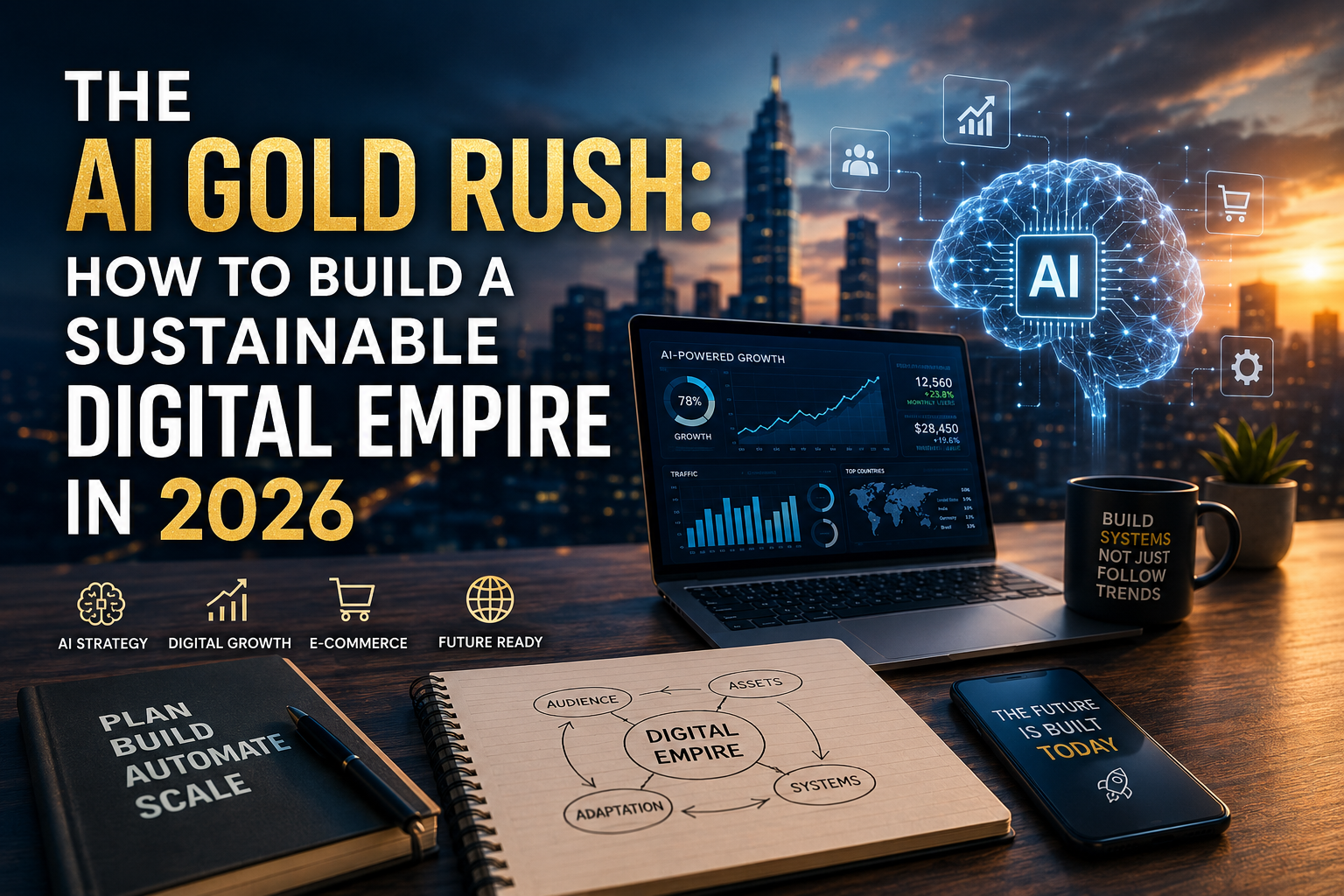
In reality, sustainable projects usually rely on a few fundamentals.
1. Audience
People need to discover your work.
Discovery channels include:
- Search engines
- Blogs
- Email newsletters
- Communities
- Social platforms
The objective is not visibility alone.
The objective is reaching relevant audiences.
2. Valuable Assets
Digital assets may include:
- Articles
- Guides
- Educational resources
- Product collections
- Templates
- Knowledge libraries
Each asset contributes to a larger ecosystem.
3. Systems
Systems improve repeatability.
Examples:
Research → Draft → Review → Publish
Visitors → Information → Decision → Action
Systems help reduce unnecessary friction.
4. Adaptability
Technology evolves.
Audience behavior changes.
Strong projects adjust continuously.
Adaptation often matters more than speed.
Common Challenges During AI Adoption
Chasing Too Many Trends
New tools appear constantly.
Trying everything often reduces focus.
Choose one direction.
Improve gradually.
Building Without Distribution
Many useful projects remain invisible.
Discovery matters.
Distribution should become part of the plan.
Expecting Immediate Results
Digital projects often improve over time.
Consistency frequently matters more than intensity.
Creating Without Original Perspective
AI increases access to creation.
Original insights and practical experience remain valuable.
Models That Continue Creating Long-Term Value
Different approaches suit different goals.
Examples include:
Content and Education
Create useful information.
Develop trust.
Improve quality.
E-commerce and Experience
Focus on customer understanding.
Build reliable systems.
Improve gradually.
Service-Based Digital Work
Help solve problems.
Create structured offers.
Build credibility.
Authority Platforms
Publish consistently.
Develop expertise.
Earn trust.
Why Many Projects Never Reach Sustainability
Most projects do not fail because of technology.
They struggle because of:
- Limited planning
- Weak distribution
- Inconsistent execution
- Unclear positioning
Before launching:
Ask:
Does this solve a meaningful problem?
Can people find it?
Can I maintain it?
Building a Sustainable Content Engine
More content does not automatically create better results.
Quality and structure matter.
A practical process:
Step 1:
Research audience questions.
Step 2:
Create structured outlines.
Step 3:
Use AI responsibly to assist drafting.
Step 4:
Review manually.
Step 5:
Publish consistently.
Step 6:
Improve existing content.
Well-maintained content can remain useful over time.
Trust Is Becoming More Valuable
As content creation becomes easier, trust becomes more important.
People increasingly care about:
- Reliability
- Transparency
- Usefulness
- Expertise
Ways to strengthen trust:
- Publish consistently
- Avoid exaggerated claims
- Share practical insights
- Prioritize clarity
Trust develops gradually.
A Simple 90-Day Framework
Days 1–30:
Choose one niche and publish.
Days 31–60:
Build useful resources.
Days 61–90:
Improve systems and evaluate outcomes.
Focus on repeatability.
Not perfection.
Final Thoughts
Artificial Intelligence continues changing how people work, learn, and create.
But technology alone does not build meaningful outcomes.
Useful systems.
Consistent execution.
Clear communication.
Long-term thinking.
These remain valuable regardless of the tools available.
The question is not whether technology will continue changing.
The question is:
What useful things are you building while it does?
Disclaimer
This article is intended for educational and informational purposes only.
Outcomes vary depending on execution, skills, market conditions, and individual circumstances.
No business, financial, or professional results are guaranteed.
Leave a Reply